
Frequently Asked Questions
Overview of Hyperthyroidism and Treatment Options, Including Radioiodine
Q) What is hyperthyroidism?
Hyperthyroidism is a disease caused by excess amounts of circulating thyroid hormone in the bloodstream. This is a common medical condition in middle-aged to geriatric cats, and it usually results from one or more benign tumors (adenoma or adenomatous hyperplasia) of the thyroid gland. Carcinoma (cancer) is a very rare cause of hyperthyroidism in cats, at least in the initial stages of the disease.
Excess thyroid hormone accelerates most bodily processes and gradually causes the clinical signs that are apparent to most owners. The most consistent finding is weight loss secondary to the hyperthyroid cat’s increased rate of metabolism. Most cats try to compensate for their weight loss and increased rate of metabolism by eating more (increased appetite). In fact, some of these cats have a ravenous appetite and will eat literally anything in sight! However, despite the increased food intake, most cats lose weight. While the weight loss may happen quickly, it may also be so gradual that some owners will not even realize it has occurred. Other signs of hyperthyroidism may include anxiety or nervousness, a rapid, pounding heart rate, muscle weakness, vomiting, diarrhea, increased thirst or urination, heat intolerance (panting), and an unkempt hair coat. Over time, untreated or poorly controlled hyperthyroidism leads to deleterious effects on many of the cat's internal organs. Heart failure, kidney and liver disease, muscle wasting, chronic emaciation, and/or severe metabolic dysfunction can develop, ultimately leading to death.
Fortunately, hyperthyroidism is both familiar to veterinarians and relatively easy to diagnose. The veterinarian can diagnose hyperthyroidism based on the cat's history, physical examination abnormalities, and results of routine laboratory tests and thyroid hormone tests. Most cats have one or two palpable, enlarged thyroid tumors (nodule[s]) in their ventral neck area, an important finding for making the diagnosis. Almost all cats will also have clearly high serum thyroid hormone levels, diagnostic for hyperthyroidism. In those cats in which the thyroid tumor cannot be palpated or that have only borderline high thyroid concentrations, thyroid imaging (scanning) can be extremely useful in confirming hyperthyroidism (see “Why does my cat need a thyroid scan?" question in the Thyroid Scanning FAQ section below).
Cat Thyroid Storm: A Hyperthyroid Cat, Before Radioiodine Treatment Click here to watch the video
Formerly Hyperthyroid Cat, Now Cured of Hyperthyroidism With Radioiodine Click here to watch the video
Q) Do all hyperthyroid cats have a thyroid tumor? Is it thyroid cancer?
Yes, all hyperthyroid cats have thyroid tumors – every last one. However, if your cat is hyperthyroid, there is no need to panic! Most of the thyroid tumors that cause hyperthyroidism in cats are benign (non-cancerous), so it is very unlikely that your cat has cancer, especially if the hyperthyroid condition was only recently diagnosed.
All thyroid tumors in hyperthyroid cats are made up of thyroid cells that grow and function at an uncontrolled rate. This makes your cat’s thyroid gland grow larger and larger with time. In almost all hyperthyroid cats, the veterinarian can palpate the thyroid tumor.
Click here to read the rest of Dr. Peterson's informative blog post on this topic.
Q) How does one best treat a hyperthyroid cat?
Hyperthyroidism can be treated medically, surgically, by life-long feeding of an iodine deficient diet, or with radioiodine. Medical treatment consists of administering methimazole (Tapazole™ or Felimazole™) one to three times per day. Methimazole treatment usually controls the signs of hyperthyroidism, but it is not a cure (i.e., the drug will block thyroid hormone secretion but will not remove or destroy the thyroid tumor). The drug must be given for the rest of the cat's life, and it is very difficult to maintain serum thyroid hormone values within the normal range over many months. Finally, because the thyroid tumors continue to grow while on methimazole, many cats develop very large thyroid tumors after a few years, and some of these benign thyroid tumors will undergo malignant transformation into thyroid carcinomas (cancer).
Feeding a low iodine diet can work to lower thyroid hormone values, but does not destroy the thyroid tumor. In addition, the commercially available iodine deficient diet (y/d) is not very palatable and is relatively low in protein content, especially for the cat —a carnivore with high protein needs.
Surgery cures the hyperthyroid condition by removing part or all of the thyroid gland. Obviously, this requires anesthesia, and postoperative complications are not uncommon.
Radioiodine (radioactive iodine; I-131) also cures hyperthyroidism. The procedure for this treatment is simple; it is a single subcutaneous injection of a radioiodine, given much like a routine vaccine. Click here to see for yourself how radioiodine compares to medical or surgical treatments
Q) Why use radioiodine instead of medicine or surgery for a hyperthyroid cat?
Medical therapy works in most cats, but there are several reasons it may not be the best choice. First, some cats are difficult or impossible to pill. Second, mild reactions (e.g., loss of appetite and vomiting) are common, and a few cats develop serious adverse reactions to the medication (blood or liver problems; facial itching; drug allergy). Because of these side effects, it is necessary to periodically monitor the cat’s condition with blood tests. Finally, some owners may not want to have to medicate their cat daily for the rest of his or her life, especially if the cat is young or only middle-aged.
It is important to remember that while medical therapy "blocks" production of thyroid hormone secretion, the thyroid tumor(s) will still grow and enlarge over time. Some of these thyroid tumors will also transform from a benign to a cancerous tumor over time (months to years). In many cats treated with long-term medical therapy, the signs of hyperthyroidism recur when the tumor becomes so large that the medication can no longer effectively block thyroid hormone secretion.
Surgery is generally an effective treatment for hyperthyroidism, but it has disadvantages in many cats. Many cats with hyperthyroidism have heart problems and thus have more risks with anesthesia. There is also a considerable risk that there will be damage to the parathyroid glands (4 little glands located within or adjacent to the thyroid) during thyroid surgery, resulting in hypocalcemia (low blood calcium). This complication can be life-threatening and results in substantial additional hospitalization costs. After surgery, some cats develop hypothyroidism and require treatment with thyroid hormone pills for a period. Finally, there is a considerable risk that the surgery will not completely cure the hyperthyroidism, or that the condition will recur (i.e., radioiodine has a much smaller chance for recurrence).
Radioiodine therapy has some distinct advantages over medical or surgical treatment, and virtually all authorities consider it to be the treatment of choice for hyperthyroidism. With radioiodine, there is no need for anesthesia and the risk of postoperative hypocalcemia is eliminated. Methimazole (Tapazole™ or Felimazole™) treatment is not needed. The major draw back is that after receiving radioiodine, the cat must be kept in the hospital for a period (usually 3 to 5 days). Overall, radioiodine provides a simple, effective, and safe cure for cats with hyperthyroidism, regardless of age.
Q) How does radioiodine work?
Normal thyroid function requires oral intake of the element iodine (iodine is a normal part of both human and cat diets and is commonly added to salt). Once ingested, iodine is taken up by the thyroid gland, where the iodine becomes incorporated into thyroid hormone. Radioiodine (radioactive iodine; I-131) is a radioactive form of stable iodine. In its radioactive state, it naturally decays, giving off two types of radiation: gamma rays (similar to X-rays) and beta particles (electrons). The half-life of I-131 is 8 days. In other words, one-half of the radioiodine decays every 8 days.
When a cat receives radioactive iodine, the thyroid tumor tissue takes up the radioiodine just as readily as normal, nonradioactive iodine (the kind in iodized salt). All thyroid tumor tissue will take up the radioiodine in this fashion, no matter where in the body it is located. This is an important feature of radioiodine therapy because 10% of hyperthyroid cats have thyroid tumors in the chest cavity, where surgical removal is not feasible. Once the thyroid tumor tissue has taken up the radioiodine, the radioiodine emits radiation, destroying the overactive thyroid tumor cells.
Because the hyperactive thyroid tumor suppresses the function of any normal thyroid tissue, the normal cells do not concentrate any of the radioiodine. Because almost all hyperthyroid cats have some residual, normal thyroid tissue, this means that cats rarely develop an underactive thyroid gland (hypothyroidism) after radioiodine therapy. These spared normal thyroid cells then can “turn back on,” and make normal amounts of thyroid hormone after the radioiodine has destroyed all of the tumorous tissue.
After treatment, the residual (normal) thyroid tissue resumes full function within 3 to 6 months. On average, over 95% of all hyperthyroid cats treated with radioiodine are permanently and safely cured with a single injection! As an added benefit, radioiodine poses no risk to the parathyroid glands, the four small glands located adjacent to the thyroid gland, which are extremely important for maintaining normal calcium levels. Therefore, hypocalcemia (low blood calcium) secondary to parathyroid damage never occurs after treatment with radioiodine. This is markedly different from surgical treatment, which very commonly damages the parathyroid lands, causing life-threatening hypocalcemia.
Dr. Mark E. Peterson Interviewed About Hyperthyroidism in Cats Click here to watch the video
How Does Radioactive Iodine Work in a Cat with Hyperthyroidism? Click here to watch the video
Q) Isn’t my cat too old for radioiodine therapy?
Hyperthyroid cats of any age can be successfully treated with radioiodine, as long as they have no other life-threatening medical conditions. In order to rule out any additional medical conditions, your veterinarian needs to perform a number of screening tests before you schedule an appointment at Hypurrcat for the radioiodine treatment.
Q) Is radioiodine a new treatment for cats?
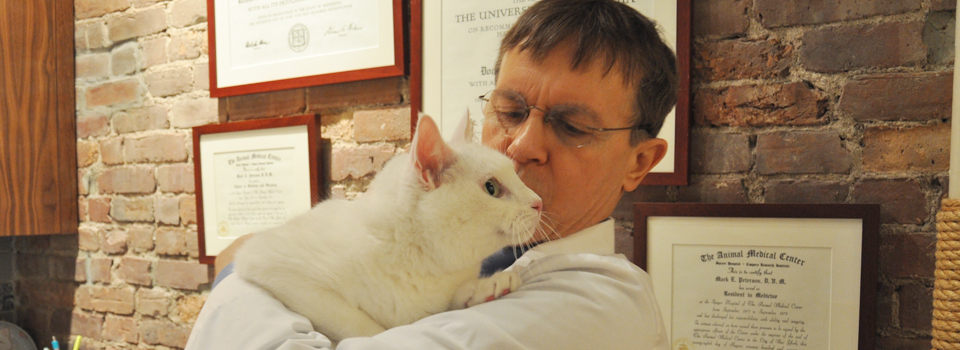
Dr. Peterson was the first veterinarian to develop this procedure for use in hyperthyroid cats. He has 40 years of experience successfully administering radioiodine therapy to cats. It is not a new or experimental treatment; Dr. Peterson has treated over 10,000 hyperthyroid cats in his long career.
Making an Appointment and Preparing Your Cat for Radioiodine Treatment
Q) How do I make an appointment for this treatment?
Making an appointment Send us your contact information and request for 131I treatment (email info@animalendocrine.com or fill out online contact form here).
Please ask your veterinarian to send us (via fax or e-mail) a patient referral form, together with the results of your cat's history (including methimazole treatment), physical examination, the serum thyroid tests that diagnosed hyperthyroidism, and routine blood work (e.g., complete blood count [CBC], serum biochemical profile, urinalysis). We need your cat’s complete medical record, from the time of diagnosis of hyperthyroidism to present so that Dr. Peterson can evaluate whether your cat is a good candidate for treatment.
Once we receive this additional information from you and your veterinarian, Dr. Peterson will review your cat’s medical information and records, and he will advise you and your veterinarian about any additional testing needed (e.g., repeat blood work, chest x-rays).
For example, since hyperthyroid cats commonly develop secondary heart disease, a chest x-ray is required in all cats that were first diagnosed longer than 6 months ago. Similarly, an electrocardiogram and echocardiogram may be indicated if arrhythmia, conduction disturbance, or heart failure is suspected. If your cat is not eating well or has chronic diarrhea, an abdominal ultrasound is strongly recommended in order to help rule out concurrent diseases.
If hyperthyroidism is confirmed and no other life-threatening medical conditions are identified, we will then schedule an appointment for your cat's thyroid scan and treatment.
Before you get blood work or any other testing done, please let Dr. Peterson review your cat's record to approve.If you have any questions, email us at info@animalendocrine.com to check Hypurrcat appointment availability.
Q) My cat has been treated with methimazole. How long should we stop the medication prior to the appointment for radioiodine treatment?
If your cat has been treated with oral methimazole (Tapazole™ or Felimazole™) your cat needs to be off the drug for at least 7 days prior to your cat’s appointment for radioiodine treatment. Similarly, if your cat is being treated with transdermal methimazole, this should be stopped 7 days before your cat’s appointment. If you and your veterinarian feel that the cat’s hyperthyroidism is too severe to stop medication, please have your veterinarian contact us to discuss other options.
Most other drugs that your cat may be receiving are fine, but please check with our office to make sure that these medications will not interfere with the radioiodine treatment. You should feed your cat normally the morning of admission to the hospital.
Q) I have been feeding my cat Hill’s y/d diet. How long should I stop feeding this diet prior to radioiodine treatment?
If your cat has been managed with the low-iodine diet, your cat needs to be changed to a regular cat food diet for at least 2 weeks prior to your cat’s appointment for treatment.
Q) What about other drugs that my cat is getting (e.g., atenolol, amlodipine, enalapril, etc.)?
It is not necessary to stop administration of most drugs other than methimazole. However, please check with our office to make sure that these medications will not interfere with the radioiodine treatment.
Q) Can I feed my cat on the morning of the appointment for radioiodine treatment?
Yes, you should feed your cat normally the morning of admission to the hospital.
Q) My cat has never been boarded or away from home before. Will my cat become bored or depressed?
Cat owners can feel both confident and worry-free about placing their cat in the care of Hypurrcat’s staff. As cat owners ourselves, we know boarding your cat for radioiodine treatment is typically much more stressful to the owner than to the cat. That's why we've gone to every extent to ensure you have peace of mind that your cat will be safe, loved, and have a good time while in our care.
Cats, especially those hospitalized for more than a day or two, need stimulation and recreation to maintain their mental health. This is often referred to as “environmental enrichment” or “environmental enhancements.” Examples include an environment with perches, hiding boxes, beds, and toys, as well as “safe” places to sleep, eat, and use the litter box. Daily positive interaction with their human caretakers also benefits hospitalized cats. Spending a few minutes each day petting, brushing, and playing with the cats, as well as speaking to them in a soft, calming voice, provides comfort to the cats.
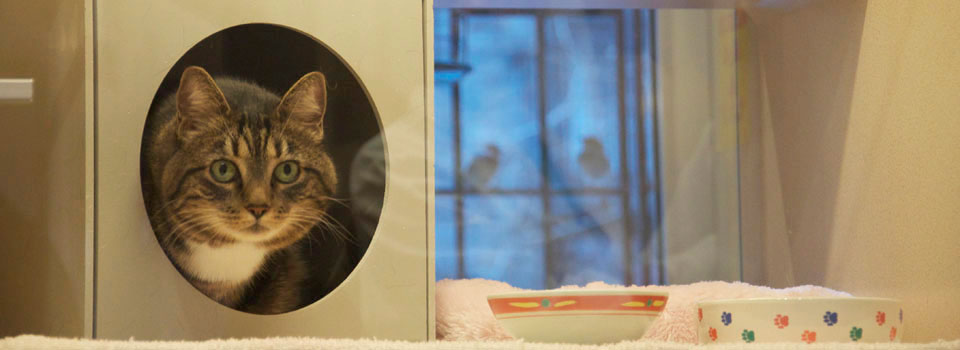
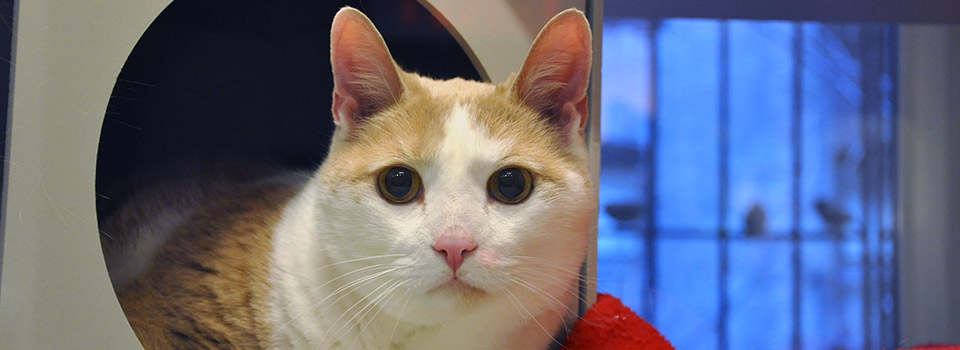
At Hypurrcat, we know that cats do much better during their hospitalization when boarded in large condos and provided with live entertainment. Each of our two-room cat condos (dimensions, 6 feet x 2.5 feet) has a separate bathroom (with litter box), 2 perches that allow the cat to get above the action, a hiding box, as well as their own bed and toys.
Our Hypurrcat treatment facilities are strictly “For Cats Only!” We have no dogs barking in the background; the cats hear only soft music played throughout the day. To help keep cats entertained during their stay at Hypurrcat, we offer a wide selection of cat videos that are shown on a widescreen TV within the treatment room. Furthermore, we feature live entertainment.
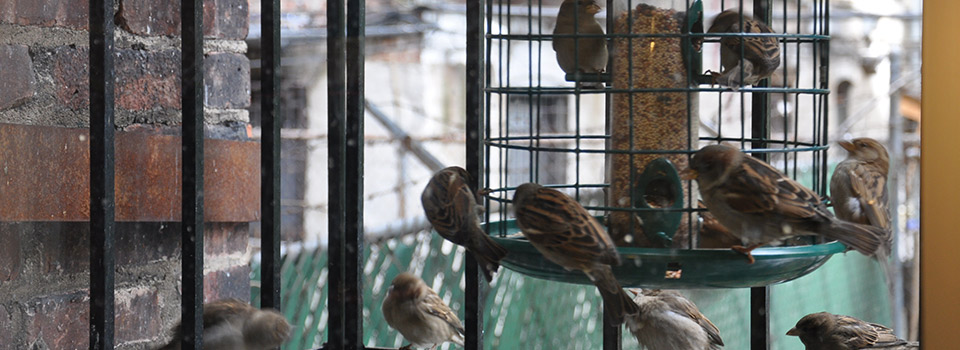
At our NYC Hypurrcat facility, the cats enjoy 40 x 27 x 25 inch condos and a great window view of the back courtyard where we have multiple bird feeders set up. The cats can observe the birds (and squirrels) feeding just a few yards away.
At our Westchester Hypurrcat facility, we are often able to link two of these condos together in order to give each cat his or her own private double-sized condo. The cats can also view two gerbil habitats in front of their condos, where the gerbils scurry through habitrails and run on exercise wheels.
Tour of the Luxury Boarding Facilities at the Hypurrcat Spa Click here to watch the video
Thyroid Scanning (Thyroid Scintigraphy): An Essential Tool for Cats to be Treated with Radioiodine
Q) What about a thyroid scan? Is this needed in my cat? Do you do this procedure at Hypurrcat?
Thyroid scintigraphy provides valuable information regarding both thyroid anatomy and physiology and can play an integral role in the diagnosis, staging, and management of hyperthyroidism in cats.
At Hypurrcat, we perform thyroid imaging on all cats in order to take a picture of their thyroid tumor(s) as part of their diagnostic workup. This is an essential diagnostic test, and we believe that no cat should ever be treated with I-131 without first having such a scan.
Q) How does a thyroid scan work in a hyperthyroid cat to locate the thyroid tumor(s)?
After administering a short-acting radioactive isotope (radionuclide) that concentrates in thyroid tissue, thyroid imaging directly visualizes the normal thyroid gland, as well as the small tumor(s) responsible for hyperthyroidism in cats. Because this procedure utilizes the physiology of the thyroid gland to create an image, thyroid imaging is so sensitive that it can actually demonstrate the presence of overactive thyroid tumors even before the serum T4 and T3 concentrations become high. Unlike other imaging techniques, thyroid imaging assesses thyroid function, as well as structure and anatomy.
To perform a thyroid scan, a small radionuclide dose is administered intravenously. One hour later, the cats are laid on their abdomen (ventral view) or side (lateral view) while the gamma camera acquires the thyroid image. The scanning process itself only takes about 3 minutes and generally is done without use of any sedation.
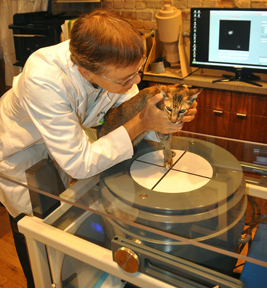
Preparing a Feline Patient for a Thyroid Scan by Injecting Radioactive Dye Click here to watch the video
Performing a Thyroid Scan on a Hyperthyroid Cat Click here to watch the video
Thyroid Tumors in Cats: Benign vs Malignant Click here to watch the video
Learn more about thyroid scans Click here to read Dr. Peterson's blog posts about thyroid scans.
Q) Why does my cat need a thyroid scan? We already know that he/she is hyperthyroid!
There are many reasons to do a thyroid scan to help evaluate a hyperthyroid cat before radioiodine treatment.
1. First of all, thyroid scintigraphy (thyroid imaging or thyroid scanning) is the gold standard test to confirm the diagnosis. As opposed to standard serum thyroid function tests (T4, T3, and free T4), this is a much more accurate test, as documented in Dr. Peterson’s recent research paper published in the journal Veterinary Radiology & Ultrasound.
2. Thyroid scans will identify your cat’s thyroid tumor or tumors, no matter where the tumor tissue is located. The scan will detect tumor tissue that has invaded into the chest or metastasized to another part of the body, so we can easily diagnose and rule out thyroid cancer. Although extremely rare in recently diagnosed cats, our studies find that the prevalence of thyroid cancer may increase to over 25% in cats treated medically for over 4 years.
3. Another important reason to do scintigraphy is to allow Dr. Peterson to accurately determine your cat’s thyroid tumor volume. Obviously, cats with larger amounts of tumor tissue will need higher doses of radioiodine (see figure below), but the severity of hyperthyroid disease frequently cannot be adequately determined with thyroid blood tests alone. Thyroid scanning is the only way to determine the volume of thyroid tumor tissue that your cat has that needs to be destroyed.
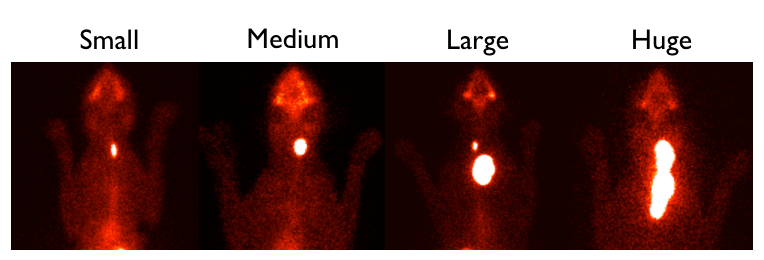
Most recently diagnosed hyperthyroid cats that we treat will require very low doses of radioiodine (<2 mCi). This is an ultra-low dose, compared to the higher doses of radioiodine of 3.5-5 mCi generally administered to all cats by treatment facilities that do not do thyroid scans to measure the tumor volume.
Why is this important? Lowering the 131-I dose lowers your cat’s whole body radiation exposure; although radioiodine is good in that is destroys the thyroid tissue. Why give larger amounts of radiation if not needed to accomplish this goal?
Equally important, low-dose radioiodine will lower the prevalence of post-treatment hypothyroidism (underactive thyroid), which is common when we give an overdose of radioiodine to cats. See this PDF for our recommendations for long-term monitoring.
4. Thyroid scintigraphy should always be done in hyperthyroid cats when a thyroid tumor is not palpable, especially in cats with severe or long-standing hyperthyroidism. In many of these cats the thyroid tumor has fallen into the chest. The only way to determine the proper dose of radioiodine in these cats is to calculate the tumor volume by thyroid scanning.
Learn more about thyroid scans Click here to read Dr. Peterson's blog posts about thyroid scans.
Q) Is anesthesia or sedation required for the thyroid scan?
Your veterinarian or someone at another treatment facility might have told you that they do not recommend thyroid scanning because of the anesthesia that is required to do this scan. They are correct in worrying about the danger of anesthetizing a cat with hyperthyroidism, but this is not a reason to avoid use of thyroid scintigraphy. We never anesthetize our hyperthyroid cats and only very rarely use even mild sedation to complete a thyroid scan. Over 99% of the cats we scan can be easily done with no sedation at all. See this video of Dr. Peterson doing a thyroid scan:
Performing a Thyroid Scan on a Hyperthyroid Cat Click here to watch the video
Admission Day and Hospital Stay During Radioiodine Treatment
Q) What should I do on the day of my cat's admission for radioiodine treatment?
Please bring your cat to the hospital in a carrier at the scheduled time. You should feed your cat that morning (fasting is not necessary).
Admission Day at The Hypurrcat Spa for Hyperthyroid Cats Click here to watch the video
Q) Should I bring anything for my cat on the day of admission?
Please bring enough food for up to 5 days, as we want to maintain your cat's regular diet. We encourage you to bring one or more small personal items (e.g., a sock or toy) to place in your cat's cage. However, don’t bring anything of sentimental value because we cannot return these personal items; they may become contaminated with radiation.
Q) What happens on the admission day?
When you arrive at our Hypurrcat facility on the admission day, we will review the "Owner Consent" and "Release Information” forms. If you wish, you may download the Owner Consent form in advance, and fill out the required information prior to your cat's examination.
Once the required paperwork has been reviewed, you and your cat will meet with Dr. Mark Peterson. He will thoroughly examine your cat and review the medical records and tests performed by your regular veterinarian. He will also answer any questions you have concerning the treatment or long-term care.
We will next collect a blood sample for determination of a complete thyroid panel (4 thyroid tests), as well as any other tests that are deemed necessary. Through the same catheter used for blood collection, we then inject the radioactive dye needed for thyroid imaging. After 1 hour, we do a thyroid scan to confirm the diagnosis of hyperthyroidism and determine the extent and severity of your cat’s thyroid tumor disease.
Based on the results of this thyroid scan, the thyroid tumor volume is determined and a proper dose of radioiodine is calculated.
Admission Day at The Hypurrcat Spa for Hyperthyroid Cats Click here to watch the video
Q) How is radioiodine therapy given?
Once we determine your cat’s radioiodine dose, it is injected in a small volume (1-ml) under the skin (subcutaneously), exactly like a routine vaccination. There is absolutely no discomfort associated with this injection, and the entire procedure takes less than 1 minute.
Treating a Hyperthyroid Cat with Subcutaneous Injection of Radioiodine Click here to watch the video
Q) What happens to my cat during hospitalization?
Once your cat has been treated, he or she need do nothing else but sleep, eat, and play while the radiation within the body dissipates to safe levels. We like to "spoil" all our patients as much as safely permissible. During hospitalization, we provide favorite foods, diversions, and lots of "hands-on" care, brushing, and affection.
At Hypurrcat, we know that cats do much better during their hospitalization when boarded in large condos and provided with live entertainment. Each of our cat condos has a separate bathroom (with litter box), a perch and hiding box, as well as their own bed and toys. To help keep cats entertained during their stay at Hypurrcat, we offer a wide selection of cat videos that are shown on a widescreen TV within the treatment room. Furthermore, we feature live entertainment.
At our NYC Hypurrcat facility, the cats enjoy 40 x 27 x 25 inch condos and a great window view of the back courtyard where we have multiple bird feeders set up. The cats can observe the birds (and squirrels) feeding just a few yards away. At our Westchester Hypurrcat facility, we link two of these condos together in order to give each cat his or her own private double-sized condo. At that facility, the cats can also view two gerbil habitats in front of their condos, where the gerbils scurry through habitrails and run on exercise wheels.
Your cat will be monitored closely while in our care. Our attentive staff frequently monitors and records your cat’s hydration level, appetite, thirst, urinations, defecations, and general attitude. The cats are fed two to three times daily by one of our Hypurrcat care specialists and are monitored daily by Dr. Peterson during their stay.
We also measure the radioactivity emitted by your cat’s thyroid every day during their hospitalization to ensure that the thyroid tumor has taken up adequate radioiodine to be effective and to determine when the cat is ready to go home.
Q) How long is the hospitalization period?
Since each cat's metabolism is slightly different, the length of stay may vary and is determined by the remaining radioactivity in your cat’s thyroid gland. State and City law requires that a cat remain hospitalized until the radioactivity has dropped to a very low level. This usually takes 3 to 5 days.
We measure the radioactivity emitted by your cat’s thyroid every day during their hospitalization to ensure that the thyroid has taken up adequate radioiodine to be effective. If a cat’s tumor fails to take up enough of the administered radioiodine dose, the treatment may not be effective unless an additional dose is given. Although rare, this is one cause for treatment failure, which we avoid by daily monitoring. We will remain involved in your cat's recovery and long-term care, and we will review the results of all follow-up thyroid monitoring and provide your veterinarian Dr. Peterson’s interpretation and recommendations.Q) How can I check on my cat's condition during treatment?
At Hypurrcat, we understand the special role the cat plays in the owner’s family. Our entire Hypurrcat team is committed to providing personal attention to the unique concerns of each individual cat and cat owner. We call or email each owner daily during their cat's stay. We are always available to speak to an owner when their cat is being treated at Hypurrcat.
Q) Is visiting allowed? I heard that each cat has his/her own web cam?
Almost all owners would like to visit their cat during their hospitalization, but they cannot because of the potential for radiation exposure during the first few days after treatment. That’s why we offer owners and veterinarians the ability to monitor their cats live over the Internet (even on a smartphone).
Both of our Hypurrcat facilities have private cameras installed in each of the cat condos. The web cams allow both the owner and referring veterinarian to check in on their cat, even though they cannot visit. When your cat is admitted, we will email you a “link” that you can open on your home or office computer (or smartphone) to monitor your cat live over the internet. You can share this link with friends and family so that everyone can participate in checking in on your cat!
Using the Hypurrcat Spa's Webcams to View Your Cat from Home Click here to watch the video
Q) Can I remove my cat from the Hypurrcat facility before the end of the treatment period?
Once treated, cats cannot be removed from the Hypurrcat facility until the level of radioactivity has decreased to a safe level. The New York City and New York State Departments of Health and the Nuclear Regulatory Commission mandate this rule.
Q) Are there any side effects or risks with radioiodine?
There are almost no side effects from radioiodine treatment. Since the radioiodine is specific in its site of action (i.e., at the thyroid tumor), there is no hair loss or increase in skin pigmentation as may be seen with other forms of external radiation therapy (e.g., LINAC or cobalt radiation). Once your cat is back at home with you, there may be a period of readjustment while your cat’s thyroid returns to normal function. Your cat may be quieter and less active than “normal” (recall that “normal” was hyperthyroid!). Because your cat's metabolic rate will return to normal after treatment, he or she may not need to eat as much food as before therapy. A change in voice may develop after treatment, but this is extremely rare. Rarely, a cat will develop hypothyroidism (underactive thyroid gland), which is easily controlled with thyroid hormone supplementation. Overall, side effects are extremely rare.
Radioactive iodine, despite its somewhat scary title, is considered the "gold standard" for safety and efficacy in treating hyperthyroid cats. The greatest risk is radiation exposure to the doctors and staff who work in the thyroid treatment facility on a long-term basis. However, with stringent safety regulations, protocols, and monitoring, this form of therapy is safe for both the cats and the caregivers!
Q) What about kidney disease? Can radioiodine cause my cat's kidney function to worsen or even fail?
Chronic kidney disease and hyperthyroidism often occur together because they are both common disorders in older cats. Hyperthyroidism tends to artificially increase the blood flow to the kidneys as well as the glomerular filtration rate (GFR). The GFR is a measure of how efficiently the kidney filters the blood. When it is artificially increased, it can mask renal insufficiency; blood tests on a hyperthyroid cat may appear normal despite mild to moderate kidney disease.
Treating hyperthyroidism restores the high serum T4 concentration to normal. This tends to lower kidney blood flow and GFR to normal or low levels, “worsening” kidney function tests. It is important to remember that treating hyperthyroidism itself does not cause chronic kidney disease; the kidney problem was already present before treatment. It was simply masked by the hyperthyroidism.
Chronic kidney disease is reported to be prevalent in 8% of cats >10 years of age and 15% of cats >15 years of age. In contrast, up to 30-50% of hyperthyroid cats have chronic kidney disease. This suggests that hyperthyroidism may be initiating or worsening the chronic kidney disease in these cats. If this is true, one should always try to correct the cat’s hyperthyroidism, even if the cat has known renal disease.
In addition, recent reports indicate that many untreated hyperthyroid cats develop proteinuria (excessive protein in the urine), This proteinuria resolves after successful treatment with radioiodine. In addition, high levels of retinol binding protein, a marker for renal damage, have also been shown to decrease significantly after radioiodine treatment. This too suggests that hyperthyroidism can cause reversible renal dysfunction.
Therefore, it appears that leaving a hyperthyroid cat untreated (or poorly regulated with methimazole) may be detrimental to long-term kidney function. However, treating and curing hyperthyroidism may help to preserve remaining kidney function.
Determining which untreated hyperthyroid cats have clinically significant underlying chronic kidney disease can sometimes be difficult. Methimazole and carbimazole can provide a “preview” of how the cat will be after curing hyperthyroidism. Thus, some veterinarians attempt trial therapy with methimazole or carbimazole to test what renal function might remain after treating the hyperthyroidism. Except for advanced kidney disease, the necessity of this approach is questionable, given that treatment for the hyperthyroidism would still be recommended in most cats. In support of that reasoning, the survival of cats that develop obvious kidney disease is not shorter than those that do not develop kidney disease after treatment of hyperthyroidism.
We will review your cat’s kidney tests and urinalysis prior to admitting your cat to Hypurrcat. If we find any signs of chronic kidney disease, we will begin prophylactic measures to control the kidney disease while your cat is being treated. Even in cats with healthy kidneys, we always repeat kidney tests at the end of the treatment to ensure that kidney function has not deteriorated.
Again, if kidney disease does develop, it is not caused by the radioiodine. It was present before the treatment, but was masked by the hyperthyroidism.
Hyperthyroidism and Kidney Function: A Love/Hate Relationship Click here to watch the video
Q) What happens when my cat is discharged from Hypurrcat?
When you pick up your cat, we will explain in detail the radiation safety precautions that you should follow for two weeks. If you wish to review the Release Information for Owners of Cats Treated with Radioiodine, you can find it at the bottom of the main page of our FAQ section.
We will also review when your cat should be reexamined and what tests should be done at each recheck.
Q) Is there anything we can do to lessen the chance that severe kidney disease will develop?
Absolutely. The most important factor that causes worsening of kidney disease is the development of hypothyroidism, secondary to an overdose of radioiodine. At Hypurrcat, we titrate the dose given to each cat, so that severe hypothyroidism almost never occurs. By maintaining the serum T4 value at normal levels, this helps maintain kidney function.
Initial At-Home Care for Cats Treated with Radioiodine
Q) What precautions should I take when I bring my cat home after radioiodine therapy?
Upon discharge, your cat will still be minimally radioactive. Even though the level of radioactivity is very low (much lower than the level at which human patients are discharged from the hospital), you should still exercise the following safety precautions for two weeks after discharge:
- You may cuddle with your cat for 20 minutes per day. You can have these 20 minutes all at once, or spread out throughout the day.
- Fortunately, you can pet your cat at an arm’s-length distance as much as you want; this is a safe distance.
- Your cat may not be on your bed while you sleep.
- Your cat should not be near children or pregnant women.
If you or a family member is pregnant, you cannot prevent contact between your cat and children, or you cannot keep your cat from sleeping on the bed with you at night, we recommend that your cat be boarded with your veterinarian during these two weeks.
Release Information for You and Your Hyperthyroid Cat After Treatment with Radioiodine Click here to watch the video
Q) What do I need to do with the cat litter after my cat is discharged from Hypurrcat?
Your cat will excrete much of the residual radioactivity through urine and feces. Therefore, during the first 2 weeks after your cat has been discharged from Hypurrcat, you should either flush the soiled litter down the toilet or store it until it is no longer radioactive. During this initial 2-week period, you must never put waste collected in the regular trash!
To flush your cat’s litter, you must use an appropriate litter. Although there are many brands of litter, we use the "World's Best Cat Litter" at Hypurrcat (clumping formula, green and black bag), so your cat will be accustomed to that brand. You can purchase the World's Best litter at many local pet stores.
You should scoop the litter box at least once or twice a day. You should wear disposable latex gloves when changing the litter and wash your hands after you flush it. Once the 2-week period is over, you should wash the litter pan and litter scoop with soapy water and flush this wash water down the toilet. It is not necessary to discard these items.
If you do not wish to flush the soiled litter down the toilet, the radioactive cat litter can be stored for a 3-month period to allow it to decay down completely to nonradioactive levels. To store the litter, you should collect all the soiled litter for the first 2 weeks after treatment and place it into a heavy garbage bag, tying it securely. To help prevent odors, it is best to double bag the soiled litter. Place the double-bagged soiled litter in a large trash container with a tightly sealed, locked lid. During the time you store the container, place it in an area where it cannot be reached by small children, pets, wild animals, etc. (e.g., a basement, garage, or yard). Do not place it in your kitchen, bedroom, or other frequently occupied areas. After storing this litter for a 3-month period, the bagged cat litter can be disposed of as regular trash because it will no longer be radioactive.
Q) These precautions seem like my cat is hazardous to me. How dangerous is the radiation?
The amount of radiation remaining in your cat is extremely low. The amount of radiation you might receive from your cat would be roughly equivalent to that received when you fly round-trip across the country. In fact, human patients can receive up to 15 times our average cat dose of radioiodine and still go home on the day they get treated. The major reason for this discrepancy between cats and people is that human patients always flush their waste down the toilet, removing any radioactive contamination from the home. In contrast, cats generally use a litter box, keeping the radiation in the home.
Your cat has already excreted the vast majority of the radioiodine in urine and feces while your cat was at Hypurrcat during the first 5 to 10 days after treatment. Therefore, while these discharge instructions may seem alarming, they are an extremely cautious and conservative approach. If you or any of your family were to receive radioiodine therapy, the restrictions after treatment would be much less severe. If you follow our instructions, you and your family will receive almost no exposure whatsoever.
Q) What precautions do I need to take for my other pets?
The amount of radiation that your other pets will receive by contact with your cat or by using the litter box is negligible. If you have multiple cats sharing the same litter box, however, we do recommend that you clean the box at least 2 to 3 times a day to remove the contaminated litter clumps from the box. Based upon Federal, State, and City guidelines, you do not need to quarantine your cat from other pets.
Q) What if I want to continue boarding my cat during this initial 2-week period?
If you know that you cannot follow the recommended safety precautions (e.g., if you are pregnant or cannot avoid prolonged close contact, flush the litter, etc.), we recommend that you board your cat with your regular veterinarian during this 2-week period. Their staff would follow the same radiation safety guidelines you would, including properly handling the cat litter and avoiding close, prolonged contact with your cat.
Q) Will you contact my regular veterinarian? What kind of aftercare will my cat need?
After you pick up your cat from Hypurrcat, we will send your veterinarian a letter summarizing your cat’s treatment and recommending monitoring strategies. Your veterinarian can also contact us if he or she has any further questions.
When are the recommend follow-up times for monitoring after radioiodine?
After discharge from our Hypurrcat facility, your cat should be monitored at 1, 3 and 6 months, and then every 6 months thereafter. Of course, if your cat isn’t doing well at any time (this is not expected), an earlier recheck is always recommended.
What follow-up monitoring is recommended? What tests should be done?
At the 1 and 3 month recheck times, we recommend that your cat have a complete physical examination (including a blood pressure reading) and blood tests performed. These recheck(s) should be done by your regular veterinarian. In general, the laboratory testing to perform at these times include a serum chemistry panel, including creatinine and urea nitrogen (two kidney function tests) and a serum thyroid testing (T4 and TSH concentrations).
If your veterinarian emails your cat’s recheck laboratory results and brief clinical history, Dr. Peterson will provide you and your veterinarian an interpretation of these test results, as well as his recommendations.
At the 6-month recheck (most important follow-up time), you have two options: you can either return to Dr. Peterson for an exam and testing, or you can again return to your regular veterinarian for recheck. If you return to your regular veterinarian at this (6-month) recheck period, we will provide you with an Animal Endocrine Clinic lab form to cover the cost of these blood and urine tests. Although we cover the cost of the 6-month lab tests, we do not pay for your vet’s examination fee, blood draw fee, or other testing. If you return to the Animal Endocrine Clinic for this recheck, there will not be an additional charge for the exam or blood pressure monitoring. In either case, Dr. Peterson will write an evaluation letter to your veterinarian with his comments and recommendations for further monitoring or treatment, if needed.
Download our Monitoring and Follow-Up Guide here.
Q) How soon will my cat return to normal?
Your cat’s behavior may change within a few weeks, but some cats require as much as 2 to 3 months for all the clinical signs to disappear. As the metabolic rate returns to normal, body functions slow down. Your cat will become calmer. Along with a slower heartbeat and respiration, changes may include weight gain, better grooming, less vomiting, reduced appetite, fewer visits to the litter box, and more sleeping. Some cats gain one or more pounds in the first month, whereas other cats put lost weight back on more slowly.
Q) What should I feed my cat after radioiodine treatment?
Click here for our guides to dietary management for hyperthyroid cats. The dietary guides are at the bottom of the page.
Long-term Follow-up for Cats Treated with Radioiodine
Q) Can the hyperthyroidism ever recur?
Yes, although it is very uncommon (less than 5% of treated cats). These recurrences usually develop 3 years or more after the hyperthyroidism was first treated. Therefore, such relapses may stem from a new thyroid tumor, rather than the first tumor re-growing.
Q) What is the success rate of radioiodine therapy?
Our research studies have shown that a single dose of radioiodine will cure 95% to 98% of hyperthyroid cats. Those cats that are not completely cured after initial treatment will still improve clinically because most of these cats have some decrease in their circulating thyroid hormone concentration. If your cat is in the small minority that is not cured within 3 to 6 months after treatment, we generally recommend retreatment with radioiodine as the best treatment method. Virtually all cats that remain hyperthyroid after the first treatment are cured by the second treatment.
Other facilities may boast that they can cure a higher percentage of cats, but they do so at the expense of making many more of their cats hypothyroid (underactive thyroid). The bottom line — it is easy to give a large dose of radioiodine to all hyperthyroid cats and lower the T4 value, but it is much more difficult to avoid creating a state of hypothyroidism. This requires the calculation of tumor volume, which we do with thyroid scintigraphy (scanning).
Q) How often should my cat be monitored after treatment with radioiodine?
We recommend monitoring at 1, 3 and 6 months after treatment, and every 6-12 months thereafter. At each of those visits, a serum thyroid panel (including serum T4 and TSH concentration) and serum chemistry analysis (at least serum creatinine) should be repeated to monitor thyroid and kidney status. Further information on monitoring post-treatment is available here.
If you or your veterinarian email us a copy of these test results, along with an update of your cat’s clinical status at time of testing, we would be happy to help with test interpretation, comments, and recommendations.
After the 12-month recheck, additional monitoring visits are recommended at least once yearly.
Q) What is the long-term prognosis for my cat after radioiodine treatment?
The long-term prognosis for hyperthyroid cats treated with radioiodine is excellent. Many owners are hesitant to treat older cats with radioiodine. But remember, old age is not a disease. Almost all cats (including cats of all ages) return to normal health and live a completely normal life after radioiodine therapy.
Q) How often does hypothyroidism develop after radioiodine therapy?
The prevalence of hypothyroidism varies according to treatment center and is primarily related to the dose of radioiodine that has been administered. If your cat’s thyroid tumor is small and a large dose of radioiodine is administered, this will certainly cure the hyperthyroidism. However, such an overdose will also destroy much of any normal thyroid tissue and lead to hypothyroidism, an underactive thyroid condition.
We do our best to give the “perfect” dose of radioiodine to each hyperthyroid cat we treat, individualizing the dose given to each cat. We do this by determining the amount of thyroid tumor tissue present in your cat (by thyroid scintigraphy). We raise or lower the dose, as needed, to give just enough radioiodine to destroy your cat’s thyroid tumor, but we try to give the smallest dose possible in order to preserve any normal thyroid tissue.
About 15% of cats treated develop a rise in serum TSH concentrations, but maintain normal levels of serum T4 (and free T4). In humans, this condition is called "subclinical" or mild hypothyroidism and generally does not require treatment.
In about half of cats, this rise in TSH is transient and will normalize within a few months as the normal part of the thyroid gland recovers from radioiodine treatment.
Less than 5% of the cats we treat develop a high serum TSH concentration with low serum T4 level (referred to as “overt” hypothyroidism). It is still possible that the hypothyroidism in this subset of cats will resolve, but is not as likely as with subclinical disease. We recommend close monitoring of these cat, but if overt hypothyroidism persists for longer than 3 months, then supplementation with thyroid hormone is advised.
Please note that other clinics that do not use thyroid scintigraphy for thyroid volume estimation almost always overdose the cats, and rates of hypothyroidism can be as high as 50-75%, with over half of these cats having overt hypothyroidism.
Q) What would cause hypothyroidism to develop in some cats treated with radioiodine?
Radioiodine destroys the thyroid tumor by being taken up by the thyroid gland and irradiating thyroid tissue. If there isn't enough normal thyroid tissue left (it’s it is replaced by thyroid tumor) or the normal tissue takes up too much of the dose, hypothyroidism will occur. In human medicine, virtually all patients treated will develop hypothyroidism and are treated with thyroid hormone. With our protocol, overt hypothyroidism is rare but does occur. Unfortunately, we cannot generally predict which cats will develop hypothyroidism (unless very large doses are given on purpose, as we do in cats with large tumors or thyroid cancer).
Q) If my cat develops hypothyroidism, what are the odds that it will resolve?
See above. We can't say much based on a single testing period. We need at least two thyroid testing periods at 3-6 month intervals (measuring at least serum T4 and TSH) to predict recovery or permanent hypothyroidism.
Q) Is one condition (hyperthyroidism vs. hypothyroidism) worse or more serious than the other?
A thyroid tumor causing hyperthyroidism is worse than hypothyroidism (no thyroid tumor) in our opinion.
Q) What are the clinical signs of hypothyroidism in cats?
Most cats do not have any signs. Some will develop lethargy or excessive hair shedding, but these are relatively nonspecific signs. The most worrisome issue associated with hypothyroidism is that it tends to make underlying kidney disease worse and it may enhance progression of concurrent kidney disease. By treating hypothyroid cats with azotemic, we can generally lower the serum kidney values and may slow long-term progression of kidney disease.
Q) Does Dr. Peterson stay involved with the long-term monitoring of my cat after treatment?
Yes, we would like to remain involved in your cat's recovery and long-term care. If your veterinarian emails us your cats recheck laboratory results and clinical history, Dr. Peterson will review the results of all follow-up thyroid monitoring and provide your veterinarian (and you) with his interpretation of the test results and recommendations.
Download Forms